The only way is to show up
Dear everyone,
I’m grateful to be able to share with you yet another fabulous act of end-of-year generosity: your donation will be matched up to $50,000 through December 31. As our science life becomes larger + stranger (and it only ever seems to move in this direction), the flexibility of donated dollars compared to other funding sources – the ways they allow us to act quickly on new information, and to circumvent delays – only matter more. Thank you for powering us to chase the mission at full speed.
Now is when I say stuff about where things are at. And this turns out to be an invitation to reflect on the different kinds of time – the very different things that six months can mean, across contexts in which we operate. There’s a certain kind of time dilation that happens as drug development programs approach and enter the clinic, and I’m still working to understand all the contributors, which are worthy and which are not, which can be compressed with great effort, and which can’t. It is, like everything I guess, a lived experience of the serenity prayer.
Six months since our last update, we remain in a holding pattern awaiting news from Ionis’s first-in-human trial, PrProfile. We hope some news of trial outcomes will come soon, and we hope more specifically that Ionis will choose to share both safety and target engagement data from this study – enough to perhaps gain a first glimpse at the disease modifying potential of this one particular drug. Ionis has already set an important precedent of openness by sharing a manual for the clinical rating scale used in the study, and for this we applaud them. Families participating in the trial have told us that they are doing so less for any prospect of direct benefit, and more as a contribution to research, to help those to come. To best honor their generosity, we have been steadily advocating for sponsors to publicly share individual patient data from all clinical trials in prion disease, and that is exactly what we plan to do in our own trial, of PrP-lowering divalent siRNA, beginning next year.
The update on that front: in August we received notice of funding for our first-in-human di-siRNA trial, from an NIH program called NeuroNEXT. Since then, we’ve been in the process of getting five clinical sites set up with the right trainings, permissions, protocols, and paperwork to begin recruiting patients. It remains possible that we will dose a first patient in the opening months of 2026. I hope that this will happen in under one year from when our IND was cleared by FDA in March 2025. I am working to understand why this process has taken the better part of a year, and what from this experience, both in terms of infrastructure and our own knowledge, can be paid forward to make the next time faster.
As I mentioned last time, the scope of this first clinical study is modest, and we are thinking hard about how to expand into pre-symptomatic individuals at risk – very much an ongoing conversation with FDA – and how to ultimately pivot from single to repeat dosing. As demanding a journey as it has been to lead our own drug development programs out of the lab, I feel grateful to have “one of each” – one oligonucleotide therapy at the threshold of the clinic, and one gene therapy coming up behind it – to serve as our own levers to drive regulatory conversations about how we think about risk-benefit, trial design, and meaningful outcomes in prion disease. We have a freedom that many company sponsors don’t feel they have to push these conversations away from the status quo, and toward something that better reflects the totally unique biology and constraints, the particular horrors, frankly, of our disease. This freedom is, for all that we’re a shoestring operation cute on budget and long on spirit, a form of power. And with great power comes great responsibility.
I think a lot these days about how to square the absolute specificity of biology with the human systems, such as FDA and IRBs, in whom we entrust decision-making authority over how and in whom drugs can be tested. Thinly resourced systems taxed with high levels of diverse throughput, which will naturally seek to streamline the cornucopia of human disease biology into generalizable principles, templates and precedent. I suspect that maybe the only real way to bridge these worlds is to show up, in person, with your opinions and your rollaboard. Ideally also an eye-catching jacket and a few good jokes, for winning hearts and minds. So I’ve become a bit of a human pinball, pinging most often to D.C. but also to other cities and stages, trying to remind everyone as best I can that of course, the longer we spend inside any human system, the more its workings seem inevitable. Of course, we have default settings for how we think about risk-benefit, the contents of a drug safety package, how long it takes to get into the clinic, who belongs in a trial. Of course, daily delays and frustrations and shortfalls seem like just the way it is. But it is our job – all of our job – to notice the mirage of inevitability, and call it to account. If law school taught me one thing, it’s that we totally made up our human systems. If they’re not working, it’s our job to change them.
Back at the ranch, our team of seventeen is hard at work honing additional therapeutic shots on goal, gathering and analyzing clinical datasets, and building out our understanding of prion protein biology. On the home-grown gene therapy front, we’ve reached an exciting inflection point – after years of engineering and testing different versions of CHARM, our PrP-lowering epigenetic editor, we are now at the stage of selecting a human candidate. The psychological challenge here is to commit to locking a version of the drug that we will move toward the clinic, while also knowing for sure that further engineering could continue to improve the molecule in basically every way. This exercise is excruciating, and has deepened my empathy for sponsors of new medicines in general, all of whom struggle with some version of this universal tradeoff between a good thing sooner, and a better thing later. I truly hope we will manage to resource both efforts – the push to bring version 1 to first-in-human within the next two years, and the continued work to mature version 2. We continue to be deeply fortunate that NIH, through the Somatic Cell Gene Editing consortium, has bet big on version 1 and will fund the “IND-enabling studies” – large-scale manufacturing and characterization, FDA-facing safety studies – that academic labs are almost never in a position to run themselves. I had the opportunity to visit NIH last week and to thank them for this investment in us, and to tell them how I think about paying it forward: by moving fast. By sharing everything. By de-risking new drug types in the brain that may prove useful for diseases beyond ours. I’m humbled by the partnership of our NIH program officers, who have fought to make these specific translational mechanisms a reality, and are driven to stay in tough jobs by their commitment to seeing this work through to patients. One antidote to human systems malaise is to spend time with those special individuals who are wide awake inside the systems, fighting the good fight alongside us.
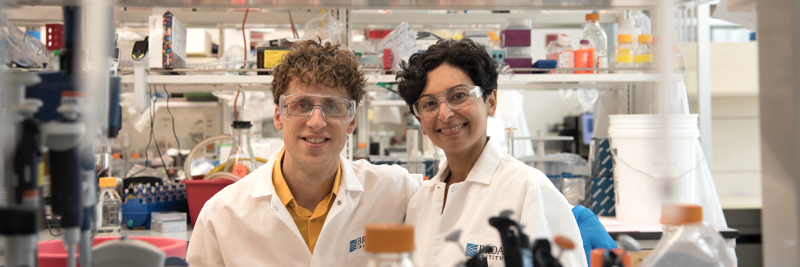
For all of these different workstreams, we continue to be beyond lucky to call the Broad Institute our home base. Earlier this year we were greenlighted to move to a larger space on the other side of the building. Umpteen crates and spreadsheets and cleanouts later (thank you team!) the dust is now settling in our new digs. Our offices, previously split across two floors, are together. Our prion room, previously rate limiting, is 3x its former size. And as a bonus, our new space is communally oriented in a way that our old space was not. The details are so simple: a centrally located common space, tables, chairs, kitchenette. A plant. Nothing fancy. And yet: the frequency of incidental interaction has gone up, the barriers to intentional interaction have gone down. Life feels like a slightly more densely woven conversation: more productive, more surprising, more lovely. It’s a specific professional incarnation of a core belief I hold more generally: that if we can find our way past our million silly hesitations, our forest of obstacles real and imagined, we really do want to be more a part of each other’s lives.
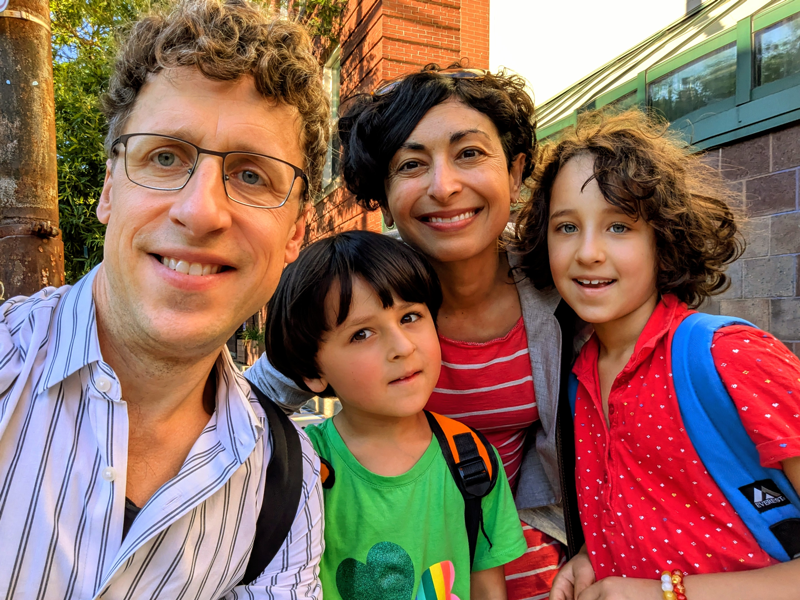
I usually close with a dispatch from the kids, a custom that I fear makes family life seem redemptive and idyllic. I promise it’s also messy, fractious and loud! I mourn the amount of friction that emanates from the daily routine, the amount of energy that’s sunk into the mundane paces of getting out the door or getting to bed. For me, the best and only antidote is surprise – the moments when the kids serve as my best reminders that nothing in this world is scripted, or remotely predictable. Like Kai Kai, now 5.5, turning his enormous eyes on me at point blank range to ask, “Am I myself, Mama? And not an atom different?”
Or Daruka, age 8, reflecting as she gazes out from our front balcony, “Every single person and thing in the world is different. Not a single thing is the same as anything else. Isn’t it beautiful?”
To which the answers are yes, and yes – and also some larger YES to the epic undertaken of living this life together, even when nothing about it is simple.
Wishing you a year rich in connection and worthy challenge.
with love,
Sonia
About Sonia Vallabh
Sonia Vallabh is co-founder of Prion Alliance and a scientist at the Broad Institute of MIT and Harvard, where her work is focused on therapeutic and biomarker development for prion disease.